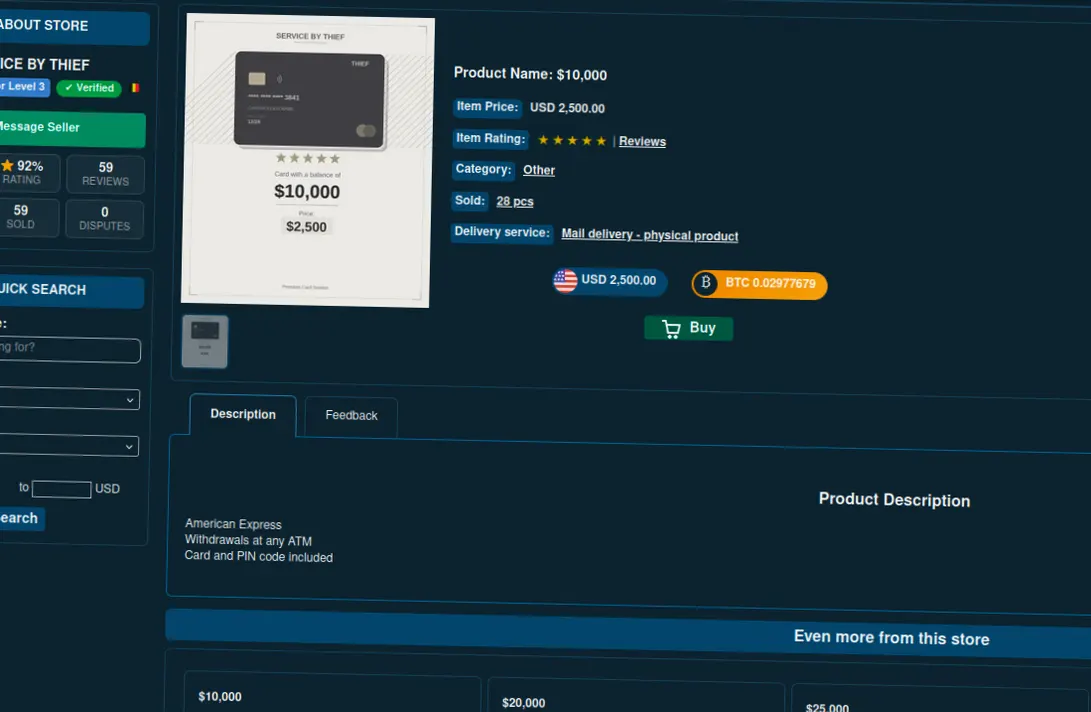
In November 2024, six counterfeit debit cards were purchased by Mark T., a 34-year-old from Tampa Bay, for $480 in cryptocurrency, as he sought an easy way to obtain cash. He put $480 into cryptocurrency to acquire six counterfeit debit cards that held stolen personal information. Initially, $4,200 was successfully withdrawn by him from three different ATMs. Unfortunately, during his fourth attempt, he faced significant issues. This incident demonstrates how quickly law enforcement can react to online crimes by utilizing sophisticated tracking methods.
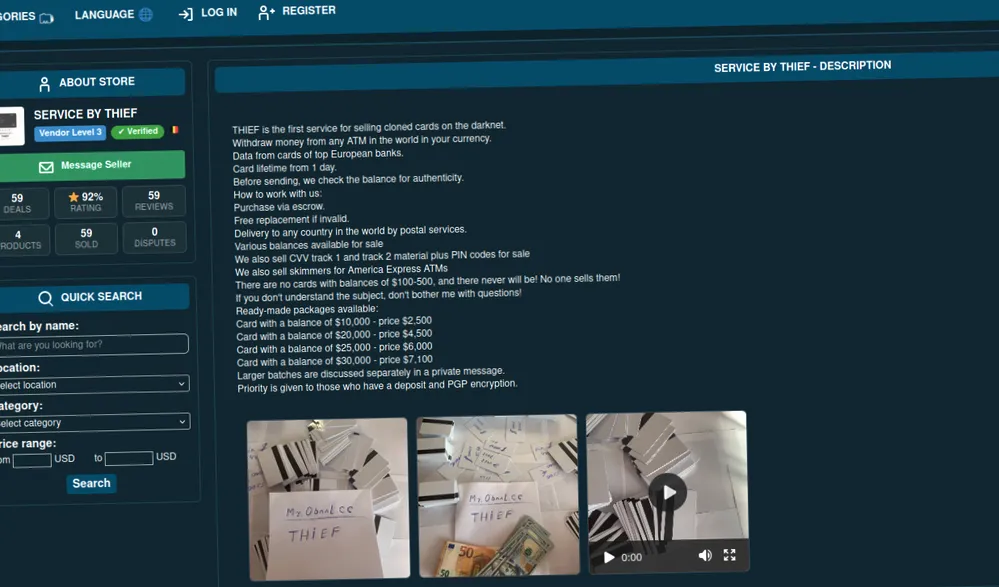
Mark's purchases occurred on a darknet marketplace, emphasizing the complexities of digital crime.
Key takeaways
- Use disguised methods for ATM transactions.
- Avoid geographical clustering of withdrawals.
- Understand the limits of cryptocurrency anonymity.
- Report fraud incidents immediately to banks.
- Educate customers on fraud detection and prevention.
The Carding Process Explained
Carding is a technique used by criminals to exchange and exploit stolen banking data. This type of cybercrime has existed for years. Mark's method illustrates a typical sequence:
- Data Gathering: Criminals collect card details through skimmers, breaches, or darknet transactions.
- Card Production: The stolen information is then imprinted onto blank cards, resulting in counterfeit cards resembling legitimate ones.
- PIN Retrieval: If the PIN is captured using devices like overlays or cameras, the buyer ends up with a functional card for cash withdrawals.
- Cash Extraction: The user withdraws funds from ATMs before the legitimate cardholder realizes the theft.
- Money Conversion: Withdrawn cash is usually transformed into cryptocurrency, which helps hide the transaction trail.
Mark acquired his items from a darknet site, choosing Monero for payment. The cards came in plain packaging, but he overlooked the crucial role of ATMs. They function not only as cash machines but also as advanced surveillance systems.
The Surveillance Factor: ATMs as Evidence Collectors
Many people overlook the advanced surveillance capabilities of ATMs. It’s important for you to understand their key features:
- Integrated Camera: This unit captures high-definition 1080p videos of users.
- Covert Camera: Some ATMs have additional cameras placed strategically to avoid detection.
- Transaction Records: Each transaction is meticulously recorded, noting the time, amount, and card details.
- Location Tracking: ATMs transmit their precise location during each transaction.
- Communication Logs: All exchanges with banking servers are logged, providing essential information about requests.
When Mark withdrew $700 from the fourth ATM, security cameras recorded a 23-second video of him. His decision not to disguise himself made him easily identifiable. This is a common mistake for those involved in illicit acts. An expert noted, "Many offenders believe that their anonymity online translates to the real world, but ATMs dispel that myth."
The Investigation Timeline: From Withdrawals to Arrest
The investigation into unauthorized withdrawals unfolded swiftly:
- Unauthorized cash withdrawals were reported by individuals in Florida, Georgia, and North Carolina on November 1, 2024. Fraud alerts were issued and the affected accounts were quickly frozen by the banks. 2. Day 3: A troubling trend of rapid cash withdrawals using cloned cards was identified by banks, prompting the start of formal investigations. 3. On Day 5, the investigation shifted to federal agents who specialize in financial crimes, as they began examining transaction logs and reviewing surveillance footage from the ATMs linked to the withdrawals. 4. On Day 8, a suspect identified as Mark appeared in surveillance footage from an ATM, and state records confirmed his identity, revealing no previous criminal history. 5. Authorities secured a warrant to explore Mark's online activities on Day 12, revealing his links to cryptocurrency transactions and involvement in darknet marketplaces. 6. Day 14: When searching Mark's home, law enforcement discovered cloned cards, a skimming device, and a laptop with evidence of illegal purchases. 7. Day 15: Following his arrest, four of the six cloned cards were cashed out by Mark, while he noted that the other two had been deactivated.
This timeline highlights how quickly financial crimes can be addressed through effective surveillance and investigative techniques.
The Numbers Behind Mark's Case
Key details from Mark's case highlight the consequences of his activities:
| Action Type | Totals |
|---|---|
| ATM cashouts | 4 |
| Federal prison term | 60 months |
| SSN | 15 |
| Overall sum extracted | 4,900 USD |
| American passport book | 480 USD |
| Financial repercussions arose from Mark's actions, requiring restitution of $22,000. | |
| Supervised release is set to last for 3 years. |
The rapid actions taken by law enforcement and the extent of the fraudulent operation are underscored by these figures.
The Downfall: Why Cryptocurrency Didn't Protect Mark
Mark opted for Monero to buy cloned cards, expecting to remain anonymous. Yet, his plan had serious weaknesses:
- Use of a Centralized Exchange: He bought Monero from a platform that mandated KYC verification, linking his identity to the crypto transaction.
- Transaction Timing: The Monero purchase, marketplace activity, and ATM cash withdrawals happened within a short two-week span, establishing a clear timeline connection.
- Physical Evidence: Authorities discovered cloned cards at his home, with magnetic tracks that matched the victims' reports, reinforcing the case against him.
- Video Footage: Surveillance from the ATM captured Mark at the scene, providing crucial evidence for the investigation.
Despite Monero’s design for user privacy, Mark's choice of a KYC exchange and swift cash withdrawals severely compromised his anonymity.
Mark's Mistakes: A Cautionary Tale
Mark's arrest stemmed from several critical errors:
- Concerns regarding fraud detection emerged due to his access to all four ATMs located within a 40-mile range from home. 2. No Disguise: Mark did not attempt to hide his identity, which made it easier for law enforcement to identify him in the surveillance footage. 3. Centralized Exchange Use: His choice to purchase Monero through a KYC-compliant exchange inadvertently linked him to illegal activities. 4. Storing Evidence at Home: During the search, authorities found cloned cards and a skimming device, which served as undeniable evidence of his crimes. 5. Large Cash Stash: The significant amount of cash discovered in his residence exactly matched the total from his ATM withdrawals, further implicating him. 6. Hasty Withdrawals: His rapid cash withdrawals over a two-week period increased his visibility. Had he spaced them out, he might have postponed his capture, but the cameras would have still recorded his actions.
Mark's story serves as a reminder of how quickly a fraudulent scheme can collapse. The mix of tangible evidence and digital footprints contributed to his unraveling.
Key Takeaways for Security Experts
Mark T.'s case is not just about individual crime; it's an example of how systems effectively detect and manage fraud. Key lessons include:
- Bank Anti-Fraud Systems: These systems serve as the first line of defense, utilizing algorithms to flag unusual activity.
- Integration of Forensics: Both physical and digital evidence are crucial in investigations, each reinforcing the other.
- Cryptocurrency Anonymity is Limited: KYC requirements at exchanges break the chain of anonymity.
- Educating Customers: Quick reporting of fraud can significantly minimize losses. Banks must emphasize education to their customers.
Conclusion: A Cautionary Tale
The repercussions are quite serious. In 2025, Mark T. confessed to his involvement in fraud and money laundering. He received a prison sentence of 60 months, and after that, he will have three years of supervised release. Moreover, he is obligated to pay $22,000 in restitution. While he wasn’t the mastermind behind the operation, his role was significant. This case serves as a reminder that even skilled criminals can be caught through diligent investigative efforts and advanced technology.
Sources